Elena Kalman
Stamford, CT, United States
Statement
Where are we going?
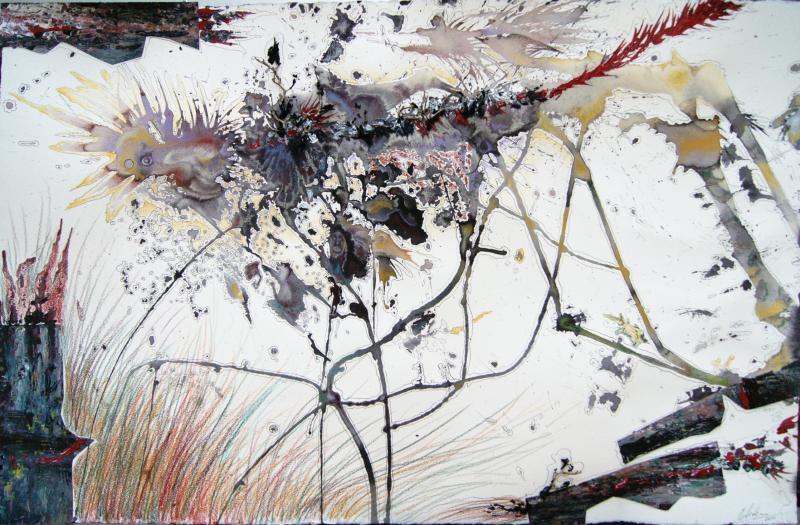
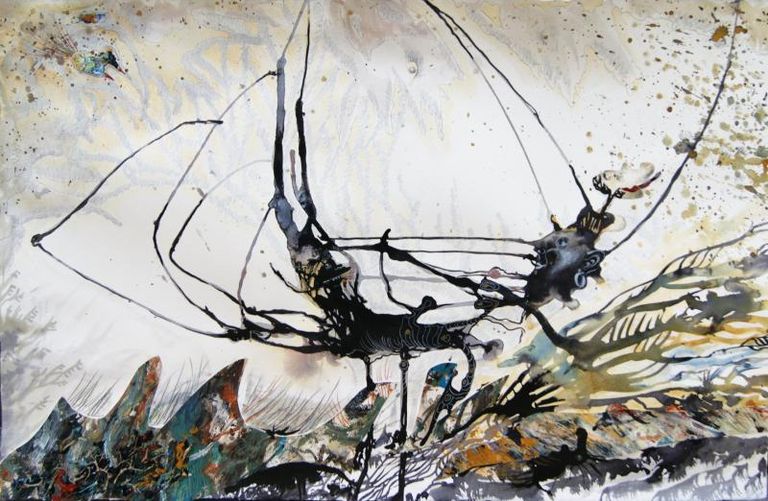
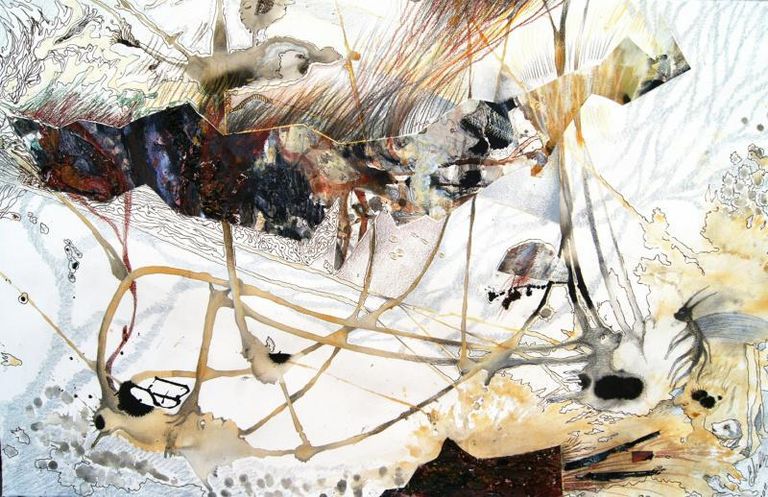
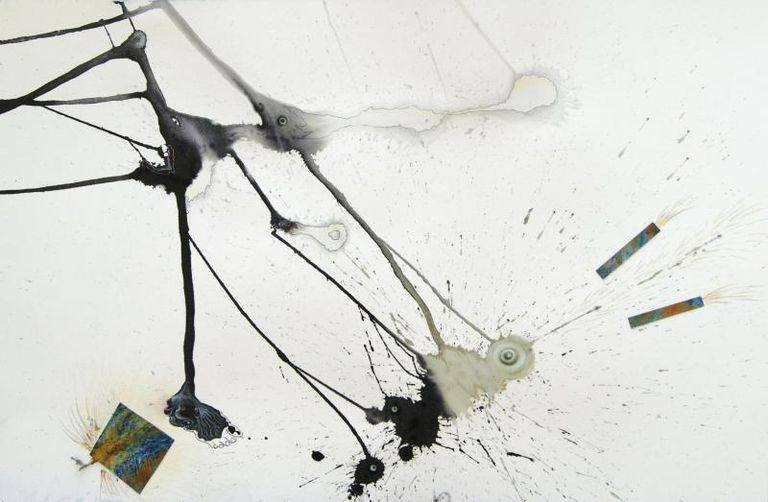
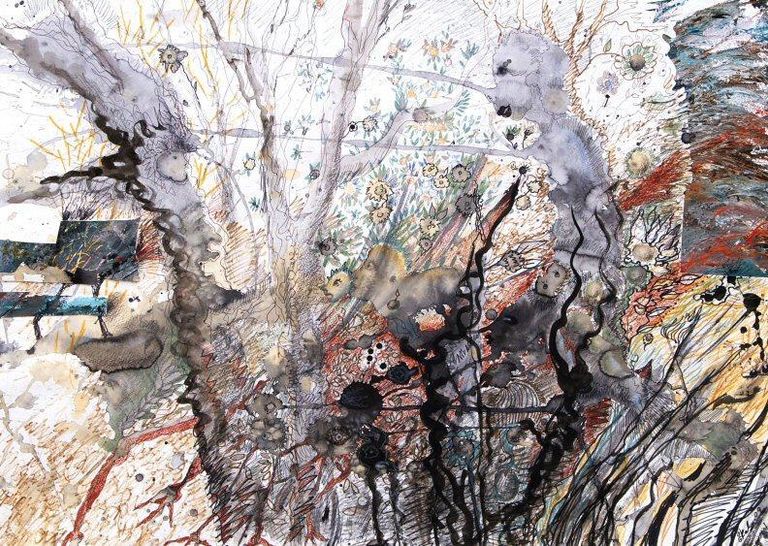
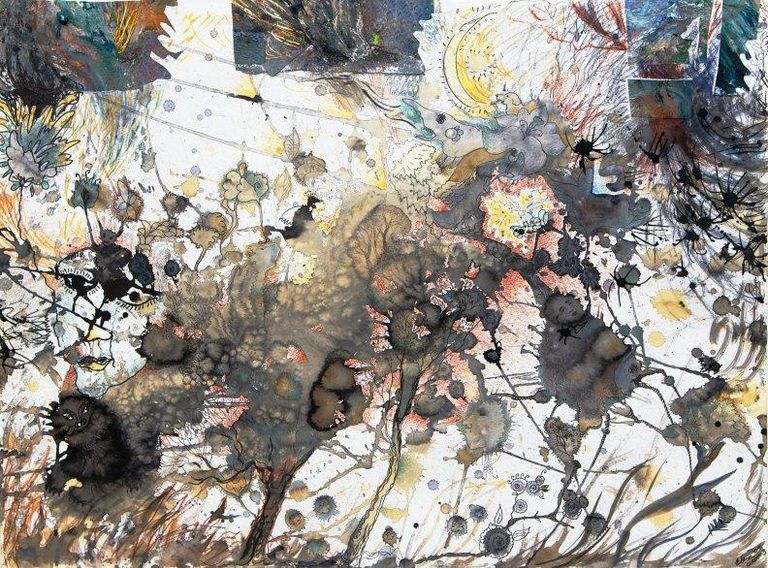
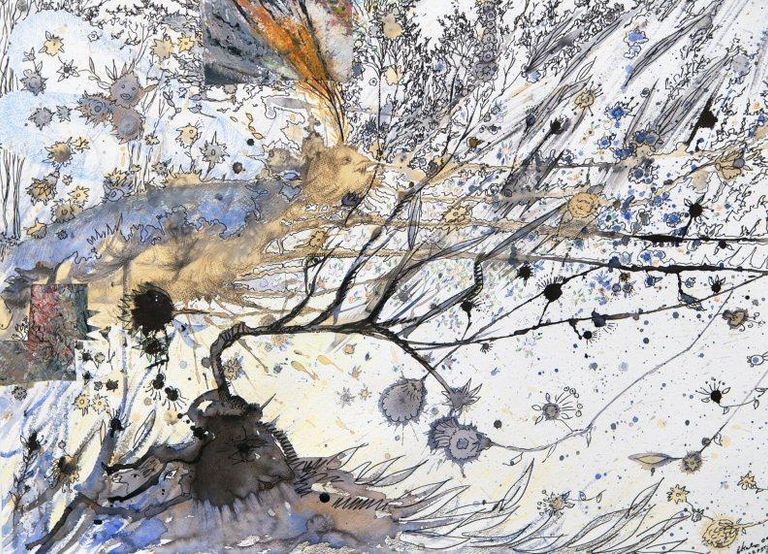
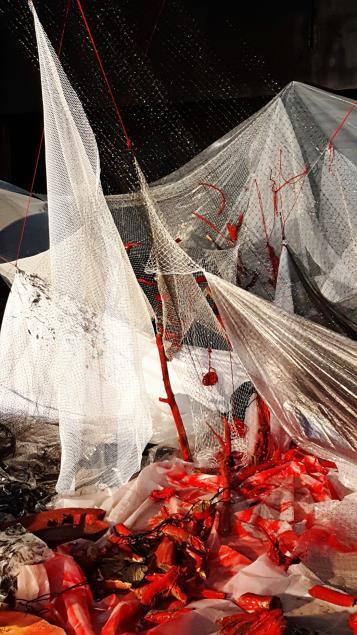
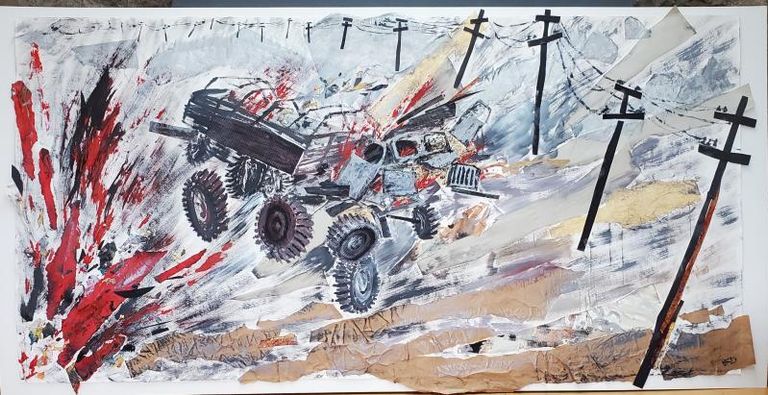
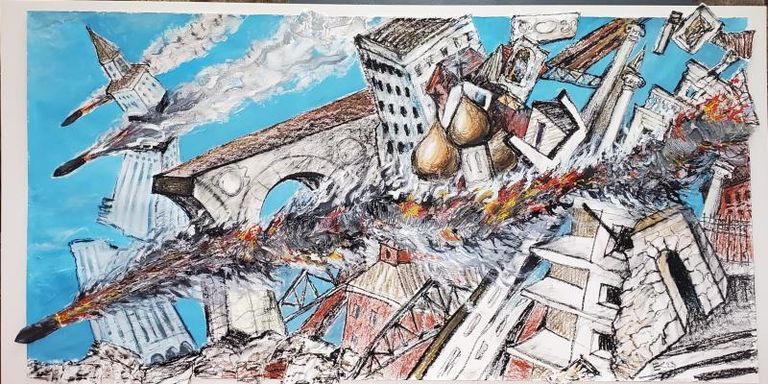
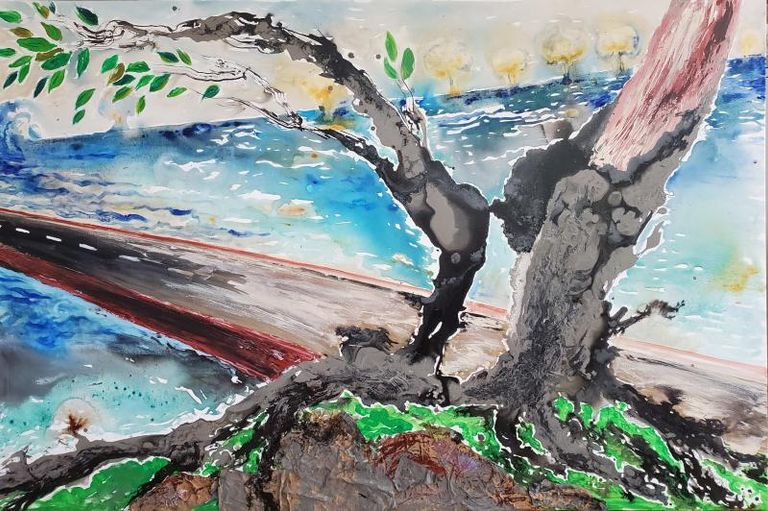
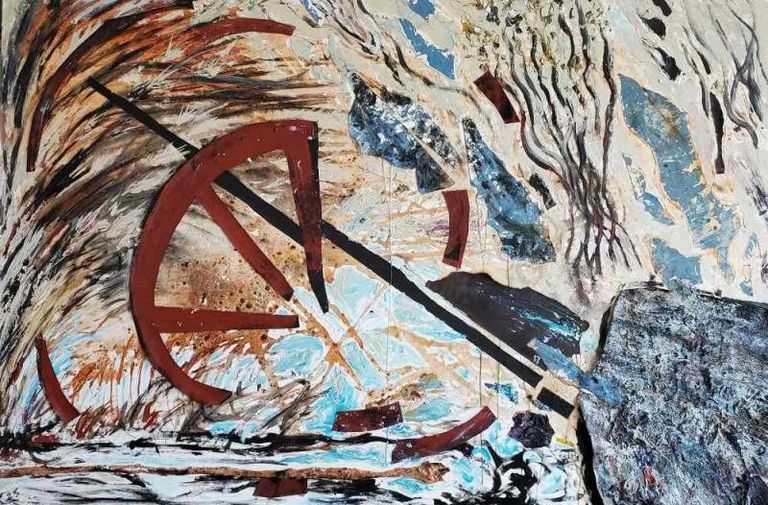
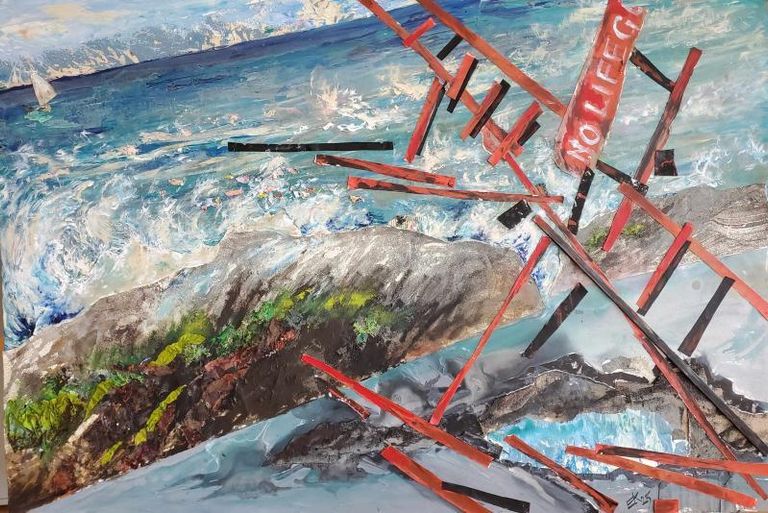
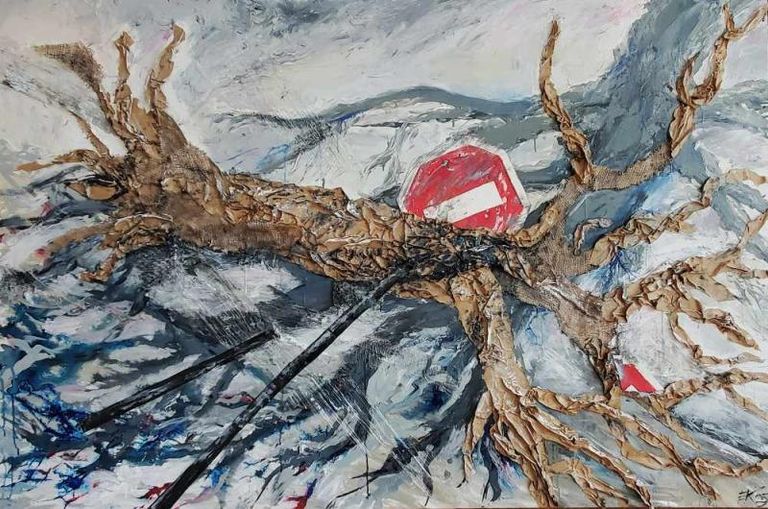
Aside from the obvious depiction of roads leading nowhere, broken road signs, explosions and fallen trees these paintings are questioning how we, as society, are dealing with our contemporary challenges. We are witnessing wars, civil unrest, polarization of society, growing cynicism, deterioration of moral values and ecological problems.
Roads lay in ruins, great cities civilizations proudly erected are deteriorating, people prefer escapism to engagement in active life, and nature rebels against human abuses. Do we acknowledge the problems? What are we doing about them? Or are we just ignoring the problems and waiting for chaos to swallow us?
The planet lost its way and spins by pure inertia. There is no clear goal or purpose. Where are we going?
My work is shaped by the tension between catastrophe and continuity—between the moments when the world seems to fracture and the deeper forces that endure beyond every crisis. I am drawn to the emotional space where fear, uncertainty, and resilience intersect.
We live in a time when upheaval feels constant. Wars, social division, ecological decline, and the erosion of shared values can make it seem as though we are losing our way. Yet even in the midst of this turbulence, there are elements of the world that remain steady. Nature, in its vastness and indifference, offers a kind of reassurance that human events cannot erase.
This duality forms the foundation of my practice.
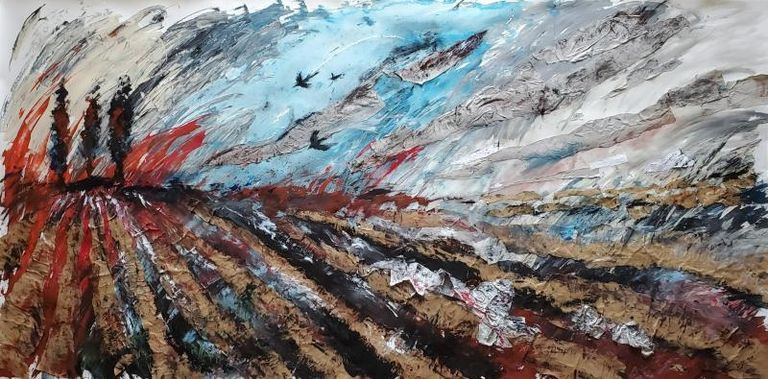
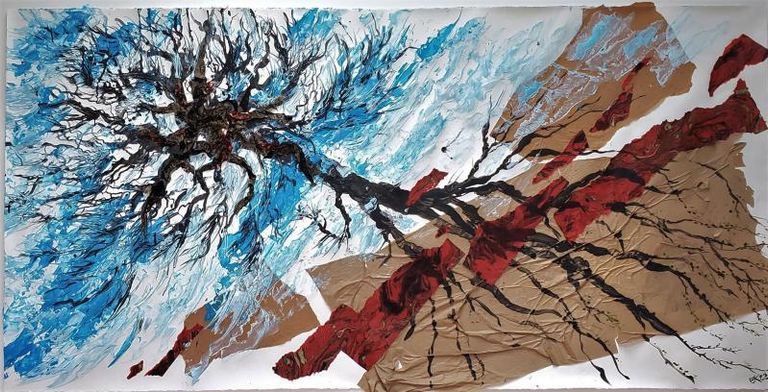
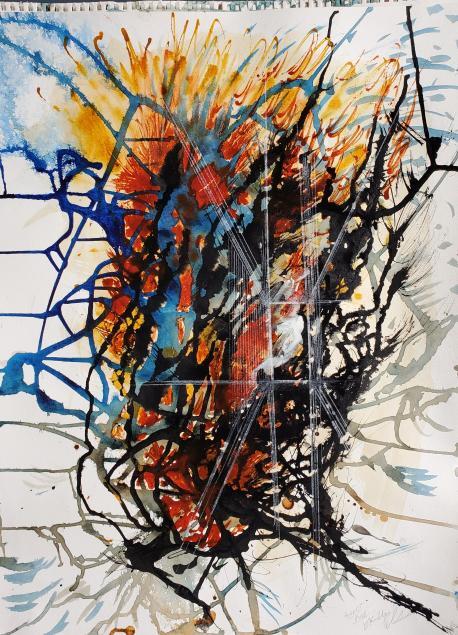
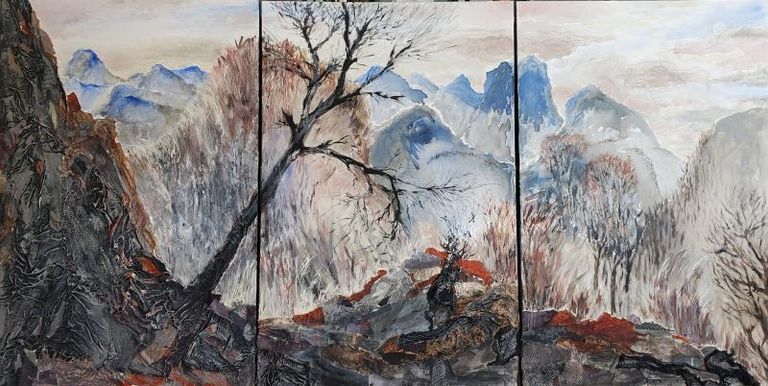
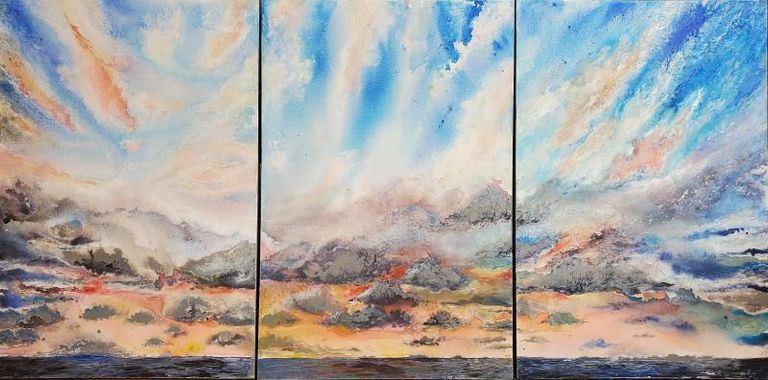
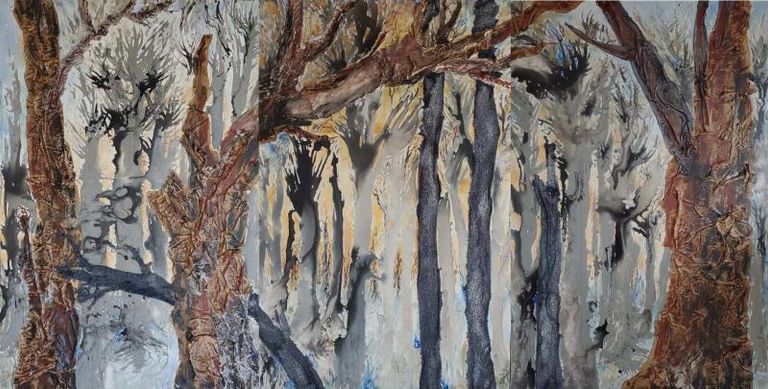
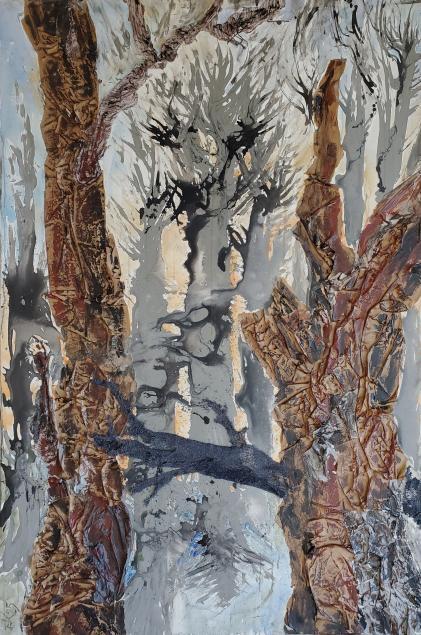
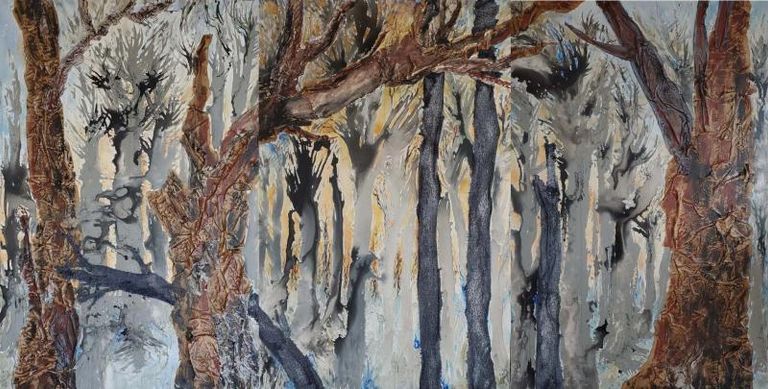
One body of work focuses on moments of rupture—real or imagined—set within ordinary landscapes: a road, a stand of trees, the edge of the ocean. These scenes are familiar, yet something has gone terribly wrong. Trees fall, structures break, distant explosions stain the horizon. Through dynamic brushwork, collaged textures, and deliberately unbalanced compositions, I explore the immediacy of fear and the fragility of the everyday.
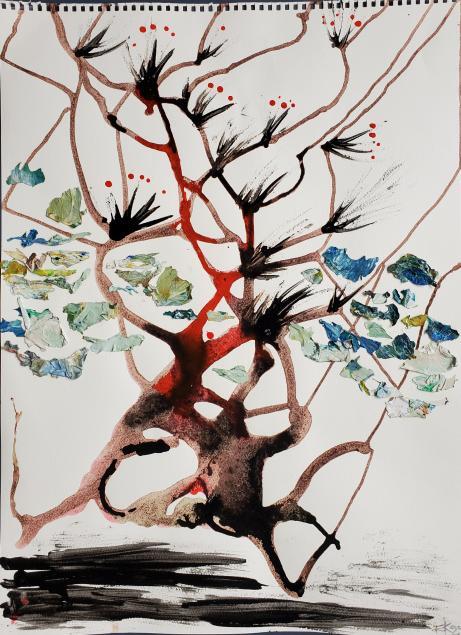
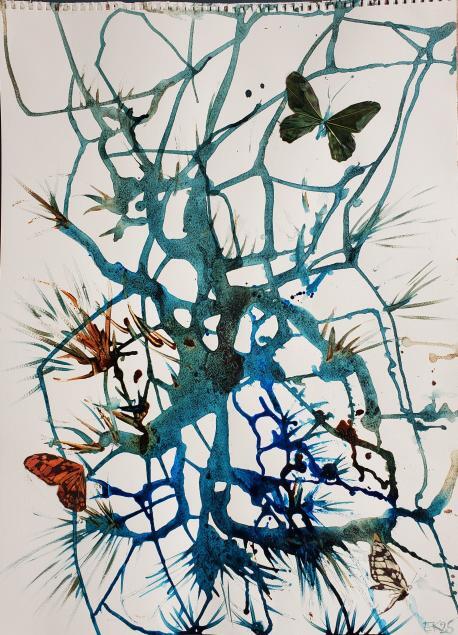
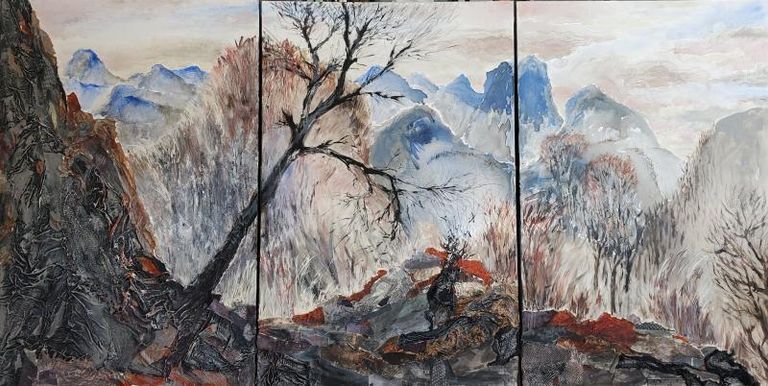
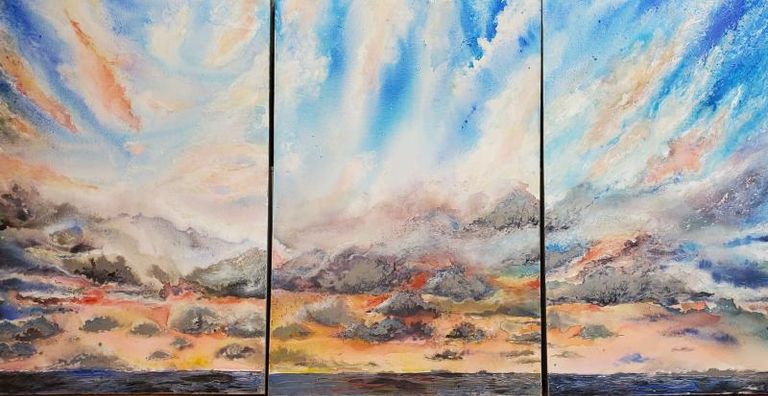
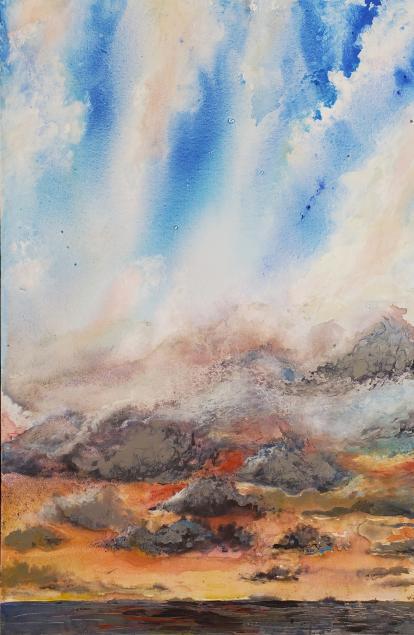
The companion series turns toward what survives. In four large-scale triptychs, I depict water, trees, mountains, and sky as elemental presences that have outlasted countless human crises. These works are slower, more deliberate, and more monumental. They reflect my belief that nature holds a kind of quiet eternity—one that persists long after our catastrophes fade.
By placing these two modes of painting in conversation, I seek to examine how we respond to instability and what we choose to hold onto. My work asks viewers to consider not only the disasters that shape our lives, but also the enduring forces that ground us, reassure us, and remind us of our place within a much larger continuum.
Biography
Elena Kalman is a painter, a creator of public art, and an architect, whose work has been exhibited in numerous museums and galleries throughout the United States, including:
The Museum of Russian Art, Minneapolis, MN
New Britain Museum of American Art, New Britain, CT
National Aquarium, Baltimore MD
Van Cortland Manor, Croton-on-Hudson, NY
Peabody Essex Museum, Salem, MA
Rose Fitzgerald Kennedy Greenway, Boston, MA
Bijou Box, Bridgeport, CT
Kalman’s work is included in the following permanent collections:
William Benton Museum of Art UConn, Storrs, CT
Iona College, New Rochelle, NY
Jewish Center of Ridgefield, CT
Carnegie Management, New York, NY
Chabad Center of Somerset County, NJ
Kalman received her Master of Architecture degree from the Moscow Architecture Institute and Fine Art degree from Kiev Art Institute. She immigrated to the United States in 1979. She is a principal of a Connecticut-based, design-oriented architectural firm, which she founded in 1988. Her commissioned sculptures and paintings became integral parts of several buildings she designed located in New your City and Connecticut.
Her series of 30 paintings “Timeline” illustrating Jewish history through the ages, ceramic relief “Jerusalem” and outdoor sculptures: “Flame” and “Holocaust and Rebirth” are commissioned by The Chabad Center of Somerset County, NJ. These are integrated into a religious building designed by Elena Kalman, AIA
Works
Selected works
27 works
The record
Exhibition history
4 exhibitions